Reviewed and updated: February 2026
The balance between oxidation and antioxidant protection is one of the foundations of cellular health. Every day, we produce free radicals as a normal part of metabolism—breathing, moving, digesting, adapting. The body is built for that. The challenge begins when the balance tips for too long: ongoing stress, smoking, pollution, poor sleep, chronic inflammation, or a diet low in plant foods can all increase oxidative load.
This is where antioxidant-rich foods come in. Not as a “perfect shield,” but as part of a wider system: nutrients, phytochemicals, and everyday habits that help keep excess oxidative stress in check and support the body’s repair processes. Plant foods are especially relevant because they’re rich in polyphenols and other bioactive compounds found in fruits, vegetables, herbs, spices, cocoa, and tea.
The essentials in 30 seconds
- Free radicals aren’t the enemy: they’re part of signaling and adaptation. The issue is ongoing excess.
- Antioxidants work best as part of an overall eating pattern—not as one “miracle food.”
- The most effective strategy is usually simple: more plant variety (colours, herbs, spices) and fewer ultra-processed foods.
- You don’t need to obsess: consistency matters most.
Integrative note: in practice, many improvements come from the basics first (regular meals, calmer digestion, better sleep, fewer ultra-processed foods) rather than “finding the perfect antioxidant.” If a plan gives you calm and breathing room, it’s doing its job. If it turns food into a control task, it’s worth simplifying.
Why antioxidants matter
Your body has its own antioxidant defences—but they don’t always keep up with a high oxidative load. Diets rich in plant foods and bioactive compounds are associated with a healthier cardiometabolic profile and more favourable health markers—partly through effects on inflammation, endothelial function, the microbiome, and metabolism.
In real life, a pattern rich in antioxidant foods may help to:
Support cardiovascular health
Support tissue maintenance and repair
Support immune function
Accompany low-grade inflammatory processes
“May help” doesn’t mean promising outcomes—it means creating a more supportive terrain.
The most meaningful antioxidant foods (without overthinking)
When we talk about “antioxidant foods,” it can sound like we need a perfect list. We don’t. What truly shifts the terrain is something simpler: repetition + variety.
Repetition so your body gets small “doses” consistently.
Variety so you’re not relying on one nutrient or one food.
A simple way to think about it is as three complementary pieces:
Plant base (colour): fruits and vegetables bring different protective compounds depending on their colour. More variety = a wider range.
Healthy fat (the carrier): extra-virgin olive oil, nuts, and seeds help you absorb certain plant compounds (especially fat-soluble ones).
Small concentrates (daily touches): herbs, spices, pure cocoa, or tea add polyphenols in small—but steady—amounts.
1. Spices and culinary herbs
Spices are highly concentrated in bioactive compounds per gram. And the best part: they don’t ask you to eat more—just to cook a little differently. It’s a small gesture that adds a lot.
Standouts: cloves, cinnamon, turmeric, oregano, thyme, rosemary, ginger, basil.
How to include them without thinking:
- The 1–1–1 idea: one spice at breakfast, one at lunch, one at dinner.
- Breakfast: cinnamon or pure cocoa
- Lunch: turmeric + black pepper (soups, rice, stir-fries)
- Dinner: rosemary or oregano (vegetables, fish, legumes)
- Evening infusion: ginger (plain or with lemon) when you want something warm. Many people find it soothing—partly because it supports digestive comfort, and partly because it helps you step out of “rush mode.”
Mini practical note: you don’t need a lot. Overdoing it can tire the palate. Better small and consistent.
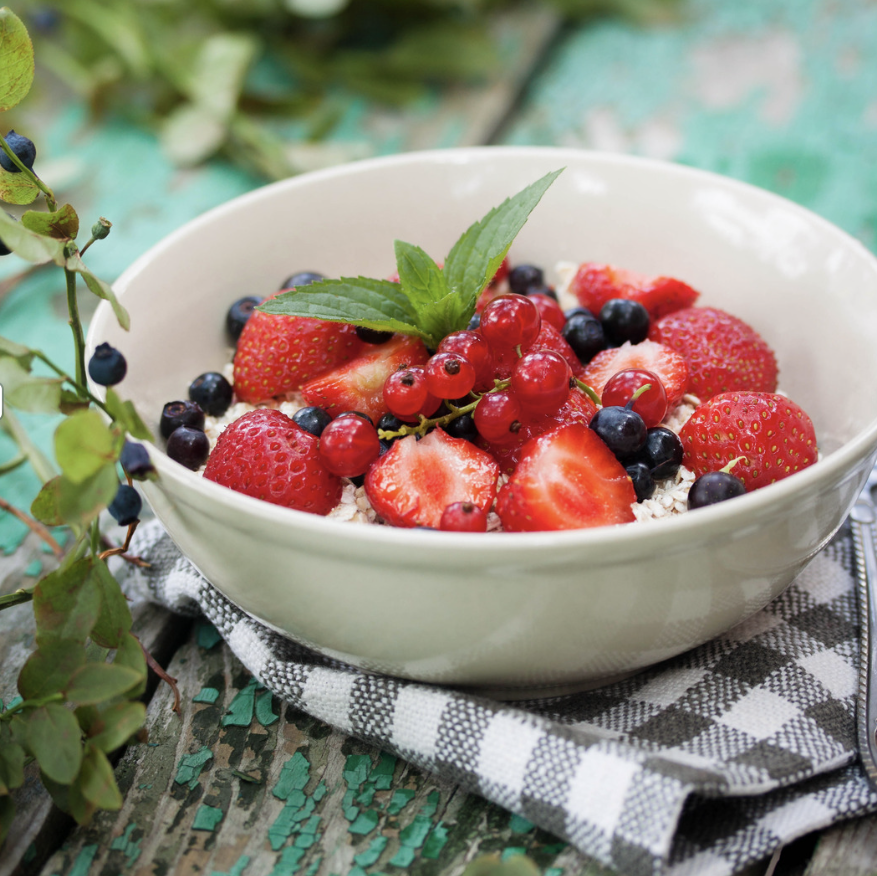
2. Red and deeply coloured fruits
They’re not magic—but they’re a simple, reliable way to add antioxidants. In general, the deeper the colour (reds, purples, oranges), the more bioactive compounds you tend to find.
Examples: blueberries, blackberries, raspberries, strawberries, pomegranate, red grapes; also kiwi, oranges, mango.
How to include them with ease:
Frozen fruit = a reliable back-up for busy days.
Pair fruit with a “carrier”: plain yoghurt, kefir (if you tolerate it), porridge, or chia pudding—plus, if you like, a small handful of nuts.
Rotate without obsessing: berries today, citrus tomorrow, kiwi the day after. Variety does the work.
3. Nuts and seeds
They provide vitamin E, healthy fats, and an extra layer of satiety that makes the habit easier to sustain.
Examples: walnuts, almonds, hazelnuts, pistachios; chia and flax.
How to include them without overdoing it:
- A small handful a day, or 1–2 tablespoons if you’re using seeds.
- Choose natural/unsalted when you can. If raw feels heavy, go for lightly toasted (unsalted, no frying oils).
- Digestive tip: if seeds bloat you, try them ground (especially flax) or hydrated (chia, 10–15 minutes). Often, that alone improves tolerance.
- Practical trick: keep a small jar of mixed seeds visible. If it’s easy to reach, you’ll use it.
4. Green vegetables and crucifers
Two groups are worth keeping close:
Crucifers: broccoli, cauliflower, Brussels sprouts, kale, watercress—interesting for their protective compounds.
Everyday greens: spinach, chard, green beans, courgette, asparagus—easy to repeat, rich in fibre and minerals.
If you enjoy them, artichokes are another great option—especially when you want to add more vegetables without making life complicated.
How to include them: steaming, a quick sauté, or gentle oven roasting tends to work well. If you’re sensitive right now, start with smaller portions and more cooked vegetables—tolerance often improves as the gut settles.
5. Cocoa and dark chocolate
Pure cocoa is a meaningful source of flavonoids. In real life, what matters is this: that it sits well with you—and that it doesn’t turn into a craving loop.
How to include it calmly:
Pure cocoa (unsweetened): 1 teaspoon in yoghurt, a smoothie, or porridge.
Dark chocolate (≥85%): a small portion, eaten slowly, as a mindful dessert.
The key isn’t “more.” It’s small, repeated, and satisfying.
Integrative note: if you tend towards low iron or you’re actively working on raising ferritin, it’s best to have cocoa/chocolate away from iron-rich meals (and away from iron supplements). Polyphenols can reduce absorption of non-haem (plant) iron—often a 1–2 hour gap is enough.
6. Green tea and antioxidant infusions
Green tea provides catechins and can be an easy way to add polyphenols day to day. But reality comes first: if it makes you jittery, triggers reflux, or disrupts sleep, it’s not for you—and that’s okay.
Other options: white tea, hibiscus, rooibos, ginger.
How to include them with ease:
1–2 cups a day, hot or iced, without added sugar.
If you’re sensitive to caffeine, keep it to the morning or choose rooibos/hibiscus (naturally stimulant-free).
If digestion is sensitive, ginger often works well as a gentle infusion.
Integrative note: if you’re in a phase of deep fatigue or a revved-up nervous system, try not to use tea as a “crutch” to push through the day. Sometimes what your body needs isn’t more stimulation—it’s more foundation: real food, pauses, rest, and a pace you can sustain.
Your “antioxidant plate” (no rigid rules)
Think of this as a compass, not a rulebook.
- 1/2 plate: vegetables (ideally two colors). If you’re sensitive, start with more cooked vegetables and expand from there.
- 1/4 plate: protein (eggs, fish, legumes, tofu/tempeh) for energy and satiety.
- 1/4 plate: real carbohydrates (rice, potatoes, quinoa; quality bread if you tolerate it) so your body doesn’t run “on reserve.”
- Finishing touch: extra virgin olive oil + herbs/spices. Flavour + protective compounds, without overthinking.
If today you can only do one thing: add one more color to your day. The rest can come slowly.
Quick antioxidant recipe
Yogurt bowl with berries and seeds
I love this because it’s a simple gesture that adds a lot: colour (berries), healthy fats and micronutrients (seeds), and a protein base (yoghurt). It’s the kind of breakfast or snack that leaves you with the feeling of “I took care of myself”—without making life complicated.
Ingredients
1 plain yoghurt (sheep, goat, or an unsweetened plant-based option)
1 handful of berries (fresh or frozen)
1 teaspoon chia or flax
A pinch of cinnamon
Optional: 1 teaspoon pure cocoa or a touch of honey
Method
Add yoghurt to a bowl.
Add berries. If frozen, let them sit 5–10 minutes to soften.
Stir in chia or flax.
Add cinnamon and, if you want, pure cocoa.
If using chia, let it sit 10 minutes—many people find it gentler once hydrated.
Variations
For more satiety: add a small handful of walnuts.
If digestion is sensitive: choose gentler fruit (kiwi or ripe banana) and use ground seeds or well-hydrated chia.
For a “healthy dessert” feel: cocoa + cinnamon + a touch of vanilla.
How to strengthen your antioxidant defences (without obsessing)
Choose seasonal foods—not for perfection, but because they’re easier to sustain and naturally varied.
Mind cooking methods: steaming, gentle roasting, or quick sautéing are usually best. Avoid reheating oils or reusing them repeatedly.
Use extra-virgin olive oil as a base. A good oil plus a few spices can transform a simple meal.
Less ultra-processed food, less load. Many bodies feel this quickly: lighter digestion, less “noise,” more room to rebalance.
Sleep and regular movement matter. Your antioxidant systems respond to rhythm—often more than we think.
Conclusion
Antioxidant foods aren’t a promise of eternal youth, and they’re not a perfect checklist. They’re something simpler—and therefore more useful: a repeated gesture that supports your foundation.
Taking care of yourself isn’t just about “adding berries.” It’s about building a way of eating your body can sustain without noise: more plants, more colours, more real cooking; fewer ultra-processed foods, less rush, less pressure. Over time, something important happens: the body stops living on the defensive and has more room to repair.
It’s not about doing it perfectly. It’s about making it doable. If you start with one thing, let it be this: add one more colour to your day.
FAQs
What exactly does “oxidative stress” mean?
It’s an imbalance: more free radicals are produced than the body can neutralize with its defenses. It’s not “bad” by definition—it becomes relevant when it persists over time.
How many antioxidant foods should I eat each day?
Counting isn’t the point. A simple rule works better: 2–3 vegetable colors a day + 1 fruit + one herb or spice. If one day you do less, it’s fine—return at the next meal.
Is it better to get antioxidants from supplements or food?
In most cases, start with food. Supplements may make sense in specific contexts, but it’s best to individualize rather than take them blindly.
Does chocolate “count” as an antioxidant food?
Yes—if it’s quality cocoa with little sugar: pure cocoa or dark chocolate (≥85%). Portion and context matter: the gesture adds up, not the quantity.
Does cooking destroy antioxidants?
It depends. Some vitamins (like vitamin C) are heat-sensitive, while other compounds hold up well—or may even become more available. In general: gentle cooking methods and variety.
Is green tea essential?
No. It can be helpful if you tolerate it, but it’s not necessary. If it makes you jittery or heavy, rooibos or hibiscus can be great alternatives.
If you’re at a point where you need clarity and structure, I can support you with a personalised consultation to adapt these guidelines to your needs.
Referencias
- Bié J, et al. Polyphenols in Health and Disease: Gut Microbiota, Bioaccessibility, and Bioavailability. Compounds 2023;3(1):40–72.
- Intharuksa A, Kuljarusnont S, Sasaki Y, Tungmunnithum D. Flavonoids and Other Polyphenols: Bioactive Molecules from Traditional Medicine Recipes/Medicinal Plants and Their Potential for Phytopharmaceutical and Medical Application. Molecules, 2024 Dec 5;29(23):5760.
- Saad AM, Mohammed DM, Alkafaas SS, et al. Dietary polyphenols and human health: sources, biological activities, nutritional and immunological aspects, and bioavailability— a comprehensive review. Front Immunol. 2025 Nov 3;16:1653378.
- Zamani M, Rezaei Kelishadi M, Ashtary-Larky D, et al. The effects of green tea supplementation on cardiovascular risk factors: a systematic review and meta-analysis. Front Nutr. 2023 Jan 10;9:1084455
- Liang Q, Peng Z. Evaluating the effect of green tea intake on cardiovascular diseases: a Mendelian randomization study in European and East Asian populations. Medicine (Baltimore). 2024 Jul 19;103(29):e38977.
- Behzadi M, Vesal Bideshki M, Ahmadi-Khorram M, Zarezadeh M, Hatami A. Effect of dark chocolate/cocoa consumption on oxidative stress and inflammation in adults: a GRADE-assessed systematic review and dose-response meta-analysis of controlled trials. Complement Ther Med. 2024 Sep;84:103061.