Reviewed and updated: February 2026
Tiger nuts can absolutely have a place in a nourishing diet without needing big labels. Their value lies in something simpler (and more useful): what they offer nutritionally, how easy they are to use in everyday cooking, and how they fit — or don’t — into your digestion and daily life.
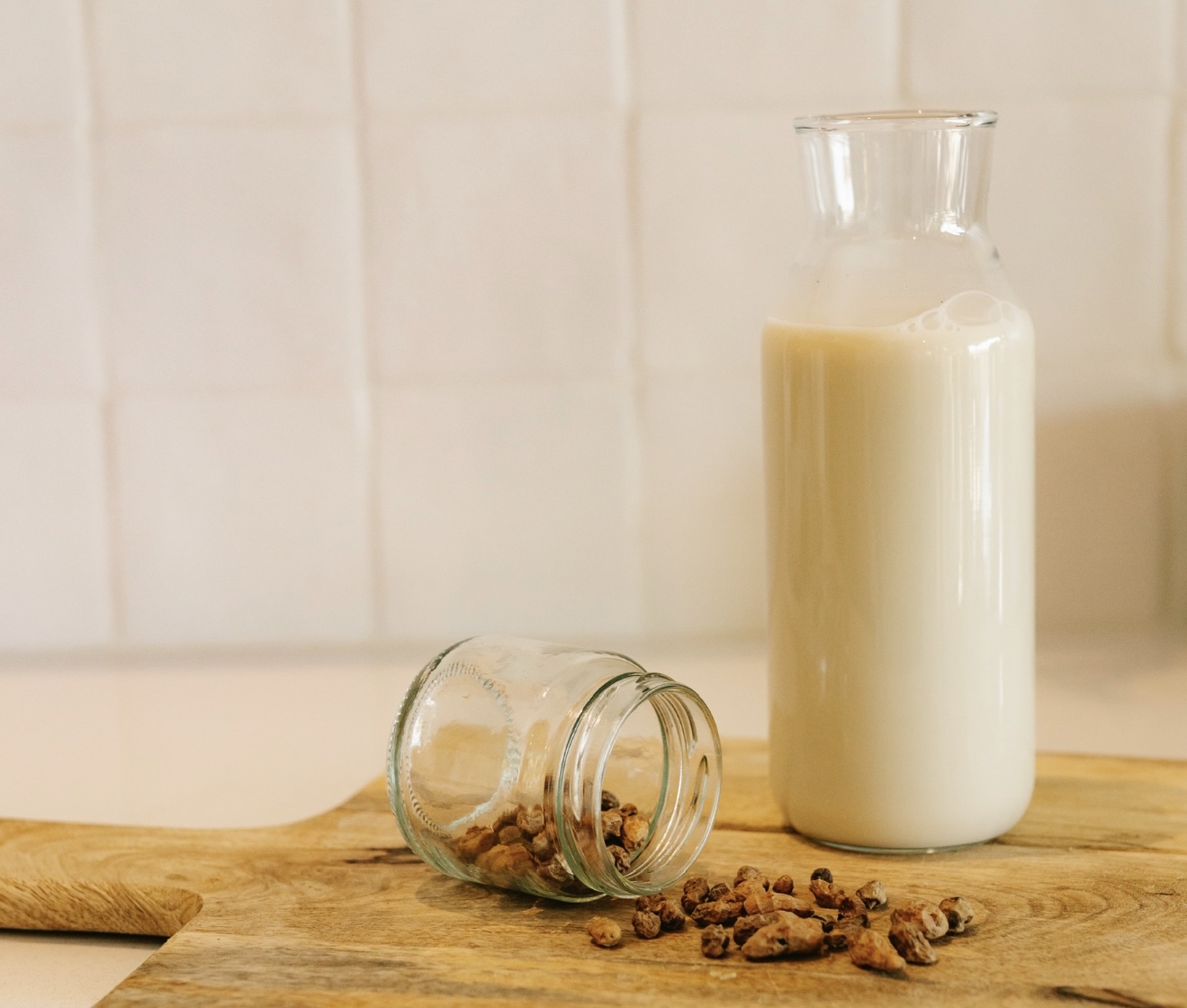
In Valencia, tiger nuts are part of a rich living tradition closely linked to horchata. But tiger nuts are more than a summer drink ingredient: they are a tuber that provides fiber, starch, healthy fats, and plant compounds that are also attracting growing interest in research.
In this article, we’ll look at what tiger nuts actually offer, which benefits are reasonable to mention (with nuance), and how to include them in everyday cooking in a simple, functional, and integrative way.
The essentials in 30 seconds
Tiger nuts are a tuber (not a tree nut) and can provide fiber, healthy fats, and interesting plant compounds.
Research is promising, but still limited in some areas: there are useful findings, though not enough to make big promises.
Whole tiger nuts, tiger nut flour, homemade horchata, and commercial horchata with added sugar are not the same thing. The form matters.
If you have a sensitive digestive system, it usually helps to start with a small amount and see how you tolerate it.
From a functional perspective, we’re not looking for “perfect” foods, but for a way of eating that is more realistic, more stable, and easier to sustain.
What Tiger Nuts Offer (in Real-Life Cooking)
1. Fiber and resistant starch
A big part of tiger nuts’ value comes from their fiber content and from starch fractions that are digested more slowly or behave like resistant starch. In practical terms, this helps explain two things: why they can be satisfying, and why they may be interesting from a digestive perspective for some people.
That doesn’t mean they’re “magic” for the gut, but they can be a useful addition within a diet that already has a good foundation and plenty of plant variety. If you’re coming from a low-fiber diet, it’s usually best to introduce them gradually.
Functional perspective: the gut tends to respond better to gradual changes than to “health overload” all at once.
2. Healthy fats (especially in tiger nut oil)
Tiger nuts contain fat, and their oil is particularly rich in monounsaturated fats (with special interest in oleic acid). This doesn’t make tiger nuts a “cardiovascular medicine,” but it does place them within an interesting fat profile when they’re part of an overall balanced, whole-food eating pattern.
3. Vitamin E and phenolic compounds
Tiger nuts and some tiger nut products provide compounds with antioxidant activity described in the scientific literature (including vitamin E and polyphenols). In real-life terms, this means they can be one more way to add plant compounds to your diet — without turning them into a supplement or an obsession.
If you’re interested in this approach, you can read my article on antioxidant foods.
And if you’re working on a broader foundation for everyday cooking, my article on clean eating may also be helpful.
Tiger Nut Benefits: What Makes Sense to Say (with nuance)
1. They can help build a more varied diet (and that already matters)
I see this often in practice: when someone starts adding real foods and moves away from the loop of ultra-processed snacks or eating the same things all the time, the overall quality of their diet improves. Tiger nuts can be one of those helpful additions: different, traditional, versatile, and relatively easy to include if they sit well with you.
2. They may be a digestive support for some people
For some people, their fiber and structure can help with satiety and regularity. For others, especially if there is gas, bloating, or a sensitive gut, they may not be the best fit at that moment — or they may simply require a smaller amount.
Here, your body matters more than theory.
Integrative note: the “best” food is not the one that looks healthiest on paper, but the one your body tolerates well right now and that you can sustain without stress.
3. Microbiome interest (interesting finding, not a promise)
There is a human study using a natural/unprocessed tiger nut drink (without added sugar) in which short-term changes in the microbial profile were observed after a brief intervention. It’s an interesting finding, especially because it looks at a traditional food in a real-life context.
That said, it’s important to be cautious: the intervention was short, the sample size was small, and the response depended on each person’s baseline microbiome. This fits very well with a functional perspective: same food, different responses.
4. A practical option for gluten-free and dairy-free diets (depending on the form)
Tiger nuts can fit well into gluten-free and dairy-free diets, especially in the form of:
homemade horchata
tiger nut flour
simple homemade preparations
The key point is the label (if you’re buying a packaged product) and your digestive tolerance.
If you’re moving toward a more plant-forward way of eating without losing structure or satiety, you may also find my article on plant-based diets helpful.
5. Glucose and tiger nuts (with context and nuance)
Because of their fiber and starch characteristics, tiger nuts may fit well into meals that aim for steadier energy. There is also research on tiger nut starch and digestibility that supports interest in more slowly digested or resistant starch fractions.
But context matters most here:
whole tiger nuts are not the same as sweetened commercial horchata
the recipe and serving size change the impact
and individual response matters a lot (especially if there is insulin resistance or diabetes)
In real life, it often works better to prioritize:
homemade horchata or versions without added sugar
moderate portions
and having it as part of a more complete snack (protein, fiber, and/or fat)
Integrative note: sometimes we look for a “star” food. In practice, it usually works better to focus on supportive habits: a more nourishing snack, a homemade recipe with less sugar, a more stable everyday food base.
How to Include Tiger Nuts in Your Diet (Without Turning Them Into an Obligation)
Tiger nuts usually work best when you use them as a cooking resource, not as a rigid rule.
Homemade horchata as an occasional drink or snack (ideally without added sugar, or with just a light sweetness).
Soaked tiger nuts (well chewed), in small amounts, as an occasional snack.
Tiger nut flour for homemade baking, or to add texture to yogurt or porridge (if well tolerated).
Tiger nut okara (the pulp left after straining horchata) for cookies, crackers, or doughs.
More balanced snacks: if you love horchata, pair it with something that adds protein or fat (plain yogurt, egg, hummus, nut butter if tolerated, etc.) for a steadier response.
Slow Medicine applied to food: you don’t need to eat tiger nuts every week. They can simply be a seasonal, cultural, or culinary option you use when you feel like it and when they suit you well.
Simple Recipes (Horchata + Two More Ideas)
1. Classic Homemade Horchata (1 liter)
Ingredients
200 g dried tiger nuts
1 liter filtered water
A cinnamon stick or lemon peel (optional)
1 date or a little honey (optional, to taste)
Preparation
Soak the tiger nuts for 8–12 hours. Drain, rinse well, and blend with the water. Let the mixture rest for about 30 minutes (optional), then strain through a nut milk bag or a fine-mesh strainer. Adjust the flavor and sweetness if you like, then chill.
2. Horchata with Cocoa (No Added Sugar)
A simple way to make it more appealing without turning it into a sugary drink.
Ingredients
Homemade horchata (already prepared)
1–2 teaspoons 100% unsweetened cocoa powder
Cinnamon (optional)
1 date (optional)
How to make it
Mix the cold horchata with the cocoa (a blender works best to avoid lumps). Taste before sweetening—sometimes the cinnamon is enough.
3. Quick Tiger Nut Okara Cookies (Gluten-Free)
Ingredients
Tiger nut okara (the pulp left after straining horchata)
1 egg
Cinnamon, vanilla, or lemon zest
A handful of gluten-free rolled oats (optional) or tiger nut flour, to give structure
A small amount of mild olive oil or coconut oil (optional)
How to make them
Mix the ingredients, shape into cookies, and bake for 12–15 minutes at 180°C (350°F). They come out rustic, fairly high in fiber, and not very sweet. If you want them more dessert-like, you can add ripe banana or a blended date.
Low-waste note: using okara is not about “maximizing benefits,” but about cooking with intention. It adds fiber and plant compounds, and it also helps reduce food waste.
Digestive Note (Important from a Functional Perspective)
If you have a sensitive gut, tend to feel bloated, have IBS, or are going through a more delicate digestive phase, start with a small amount and see how you respond.
There’s no need to force it.
And if you buy ready-made horchata, check the label: many commercial versions contain added sugar. That doesn’t mean tiger nuts “lose their value,” but it does mean the drink is no longer in the same league metabolically.
Conclusion
Tiger nuts can add variety, fiber, healthy fats, and plant compounds to your diet, while also connecting you to a real culinary tradition.
The useful question is not whether they “change everything,” but whether they fit your way of eating, your digestion, and your routine.
When a food sits well with you, you enjoy it, and you can keep it in your life without effort, that’s when it truly adds value.
FAQs
Are tiger nuts a tree nut?
No. Tiger nuts are a tuber, not a tree nut. That said, if food allergies are a concern, it’s still important to check labels on processed products for possible traces or cross-contamination.
Is horchata always healthy?
It depends on the recipe and the product. Homemade horchata (or a version with very simple ingredients) is not the same as a commercial drink with added sugar.
Do tiger nuts help the gut microbiome?
There are interesting findings from human studies using a natural/unprocessed tiger nut drink, but the studies are small and short-term. It’s a promising area, but not a universal promise—and not a guarantee of good tolerance for everyone.
Do tiger nuts raise blood sugar a lot?
It depends on the form, the portion, and the meal context. Whole tiger nuts or tiger nut flour are not the same as sweetened horchata. If glucose is a concern, it usually makes more sense to choose versions without added sugar, keep portions moderate, and have them with protein and/or fat.
How much tiger nut or horchata is “ideal”?
There isn’t one single ideal amount. In practice, it’s usually best to start with a small portion and see how you tolerate it. The best amount is the one that fits into your week without causing discomfort or displacing core foods.
In functional nutrition, an “ideal” amount is not always a fixed number — it also depends on your digestion, your context, and your tolerance.
If you’re at a point where you need clarity and structure, I can support you with a personalised consultation to adapt these guidelines to your needs.
References
Edo GI, Samuel PO, Nwachukwu SC, et al. A review on the biological and bioactive components of Cyperus esculentus L.: insight on food, health and nutrition. Journal of the Science of Food and Agriculture.2024;104(14):8414-8429. doi:10.1002/jsfa.13570. PMID: 38769860.
Zhang Y, Sun S. Tiger nut (Cyperus esculentus L.) oil: A review of bioactive compounds, extraction technologies, potential hazards and applications. Food Chem X. 2023 Sep 7;19:100868. doi: 10.1016/j.fochx.2023.100868. PMID: 37780245; PMCID: PMC10534246.
- Yu Y, Lu X, Zhang T, Zhao C, Guan S, Pu Y, Gao F. Tiger Nut (Cyperus esculentus L.): Nutrition, Processing, Function and Applications. Foods. 2022 Feb 19;11(4):601. doi: 10.3390/foods11040601. PMID: 35206077; PMCID: PMC8871521.
- Selma-Royo, M.; García-Mantrana, I.; Collado, M.C.; Perez-Martínez, G. Intake of Natural, Unprocessed Tiger Nuts (Cyperus esculentus L.) Drink Significantly Favors Intestinal Beneficial Bacteria in a Short Period of Time. Nutrients 2022, 14, 1709. https://doi.org/10.3390/nu14091709
- He L, Tan W, Wei C, Dai F, Tian J. Tiger Nut (Cyperus esculentus L.): A Systematic Review of Metabolic Regulation, Functional Bioactivities, and Sustainable Food Applications. J Food Sci. 2025 Nov;90(11):e70705. doi: 10.1111/1750-3841.70705. PMID: 41276886.
- Razola-Díaz MDC, Gómez-Caravaca AM, Guerra-Hernández EJ, Garcia-Villanova B, Verardo V. New Advances in the Phenolic Composition of Tiger Nut (Cyperus esculentus L.) by-Products. Foods. 2022 Jan 25;11(3):343. doi: 10.3390/foods11030343. PMID: 35159494; PMCID: PMC8834407.