Reviewed and updated: February 2026
Peas are one of those quiet, everyday staples. They’re versatile, easy to add to a meal, and—without complicating things—they often make it feel more complete. We tend to treat them as “just another vegetable,” but peas are built a little differently: they’re a tender legume, and you can feel that in how satisfying the plate becomes. They bring fibre, plant protein, and complex carbohydrates in a combination that supports satiety and steadier energy.
The real question isn’t whether peas are “good.” It’s how they sit with you—and how you prepare them. In this guide, I’ll walk you through what peas offer, how to use them without overthinking, and what to adjust if they leave you bloated—plus practical ideas and simple recipes you can actually repeat.
The essentials in 30 seconds
Peas are a tender legume: a useful mix of fibre + plant protein + complex carbohydrates.
In meals, they often support better satiety and more stable energy.
Fresh in season and frozen year-round: frozen peas are a practical option that holds onto nutrients very well.
If they cause gas, it often improves by adjusting portion size, cooking, and combinations (cook well, start small, keep meals simple).
The goal isn’t to eat “perfectly,” but to repeat what feels good in your body.
What are peas?
Green peas (Pisum sativum) are the immature seeds of a legume plant. That’s why—even though we cook them like a “vegetable”—botanically, they’re a legume.
In real life, that shows up in two ways: peas tend to be more filling than many vegetables, and they offer a very useful blend of fibre, plant protein, and complex carbs. They’re the kind of ingredient that can make a simple meal feel more satisfying without adding a dozen extras.
In season, fresh peas are wonderful. Out of season, frozen peas are a genuinely good ally: practical, accessible, and with a very similar nutritional profile.
Integrative note: if your digestion is sensitive, start with peas that are well cooked and in small portions. Many “peas don’t sit well with me” moments improve with portion size, cooking, and context.
Nutritional profile (what they really bring)
Peas combine three things that don’t always come together in such a simple food: fibre, plant protein, and complex carbohydrates. That’s why they work so well as a background ingredient: they help a meal feel more satisfying without feeling heavy.
As a rough reference, 100 g of cooked peas provides approximately:
Protein: ~5 g
Fibre: ~5–6 g
Carbohydrates: ~15–16 g
Fat: <1 g
Micronutrient-wise, peas stand out for folate, vitamin C, and vitamin K, plus minerals such as potassium, magnesium, and phosphorus.
And as always in plant-based nutrition, variety matters more than perfection. If you like this lens, you might enjoy your article on phytonutrients and the rainbow diet.
What this means in everyday life
More satiety with less effort: fibre + plant protein can help a meal support you for longer.
More stable energy: peas’ carbs come with fibre and tend to feel gentler than “carbs on their own,” especially when paired with extra-virgin olive oil (EVOO) and a protein source.
More nutrients per bite: peas aren’t “just vegetables”—they add nutrient density and plant variety without changing your whole routine.
Integrative note: if you’re in a bloating-prone phase, fibre can feel more noticeable—not because it’s “bad,” but because tolerance comes first. Start smaller, cook well, keep meals simple. As things calm down, tolerance often improves.
Benefits of peas
A meal that feels more satisfying (without needing more food)
Peas don’t shine because of one “magic” nutrient. It’s the combination—fibre + plant protein + complex carbs—that often translates into meals that keep you fuller, with less of that “I need something else” feeling an hour later.
In practice: a handful in brown rice, a warm salad, or a quick sauté changes the whole meal. They don’t need to be the main ingredient to make a difference.
More stable energy when the plate is well built
When carbohydrates come with fibre (and a bit of protein), meals often feel steadier afterward—fewer spikes and dips, more calm.
A simple formula you can repeat:
peas + vegetables + EVOO + a protein (egg, fish, tofu, or another legume) → more satiety and a better post-meal feel.
Fiber for digestion and the microbiome (with nuance)
Fibre is one of peas’ strengths: it can support bowel rhythm and feed the microbiome. But your current digestive state matters. If you’re sensitive, the same fibre can mean more gas when portions are large or meals are overloaded.
Integrative note: if peas bloat you, it doesn’t mean they’re “bad for you.” It usually means portion, cooking, or combination. Start small, cook well, keep meals simple.
An easy way to upgrade food quality on busy days
Peas add micronutrients and plant variety in a way that matters most when it’s repeated. You don’t need them every day—just regularly enough to count.
If you like this approach of improving food quality without obsession, you might enjoy this practical guide to antioxidant-rich foods, with simple ideas you can use day to day.
A simple tip: keeping a bag of frozen peas at home gives you extra margin on busy days—open, add, and the meal becomes more complete.
Antinutrients: what they are (and how to handle them without fear)
Like other legumes, peas contain natural antinutrients. It sounds more dramatic than it is. For most people, it’s not a problem—but it can help to understand, especially for digestive comfort.
The best known are:
Phytates (phytic acid): can reduce absorption of minerals like iron or zinc in specific contexts (very high intake + low overall dietary variety).
Lectins: may cause discomfort if eaten raw or undercooked (this is the key point).
The good news: in practice, cooking them well is usually enough.
How to reduce them without turning it into a ritual
Cook peas properly (boiled, steamed, blended into soups, or sautéed after cooking).
If you’re sensitive, cook them until tender rather than “al dente.”
Add vitamin C alongside the meal (lemon, peppers, tomato, citrus) to support plant iron absorption.
Use digestive-friendly spices if they suit you: cumin, ginger, turmeric, fennel.
Start with smaller portions if gas is an issue. Often, it’s the dose—not the food.
Integrative note: if your gut is irritable, you don’t need to “prove tolerance” with big servings. You need calm. Smaller portions, more cooking, simpler meals.
How to include peas (without overthinking)
Peas work especially well as a supporting ingredient: they don’t need to be the star to improve a meal.
Five quick, real-life ideas
Warm, filling salad: boiled potatoes + peas + canned sardines or egg + EVOO + lemon.
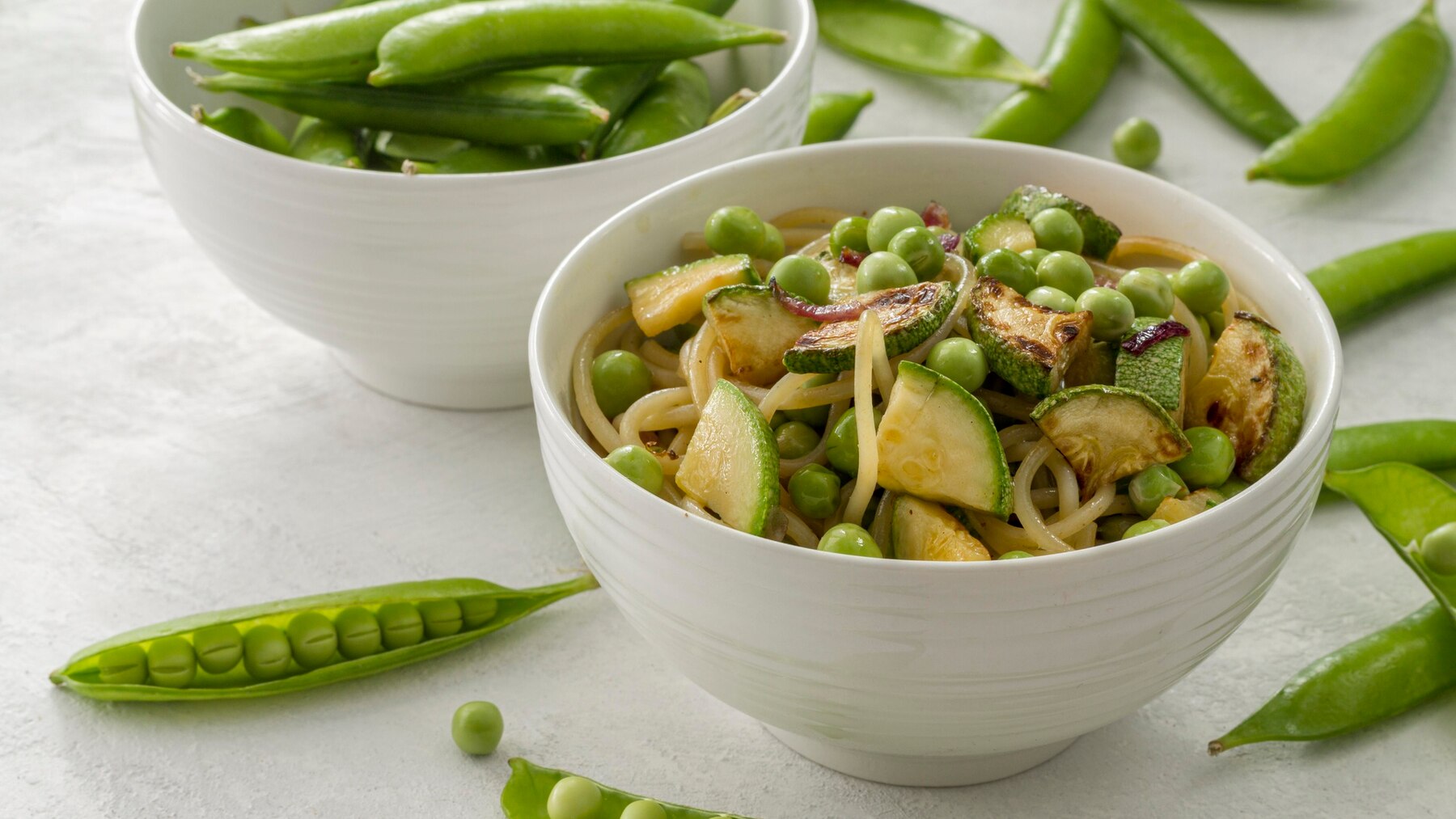
10-minute sauté: peas + courgette + carrots (or green beans) + cumin + EVOO.
Simple green rice: brown rice + peas + spinach + lemon zest + herbs.
Easy side: steamed peas + EVOO + mint/parsley + seeds (if tolerated).
Upgrade a “plain” meal: add peas to vegetable soup, a mixed stew, a mild curry, or a simple wok. Sometimes that handful changes everything.
Two easy recipes (to actually use them)
Gentle pea soup (15 minutes)
Ideal if you want something light but satisfying—and often easier when digestion is sensitive.
Ingredients (2–3 servings):
300–400 g peas (fresh or frozen)
1 leek (or half an onion if you tolerate it)
1 zucchini (optional, for extra softness)
EVOO, salt, pepper
Mint/spearmint (optional)
Instruccions:
Sauté the leek with a little EVOO for 2–3 minutes (don’t brown it). Add peas (and zucchini if using), cover with water or broth, and simmer for 10–12 minutes. Blend, adjust salt, and finish with EVOO.
If you like, add mint—it brings freshness and many people find it gentler.
Rice with peas (12–15 minutes)
A repeatable staple—the kind that supports your week.
Ingredients (1–2 servings):
Cooked rice (great if you already have it)
1 cup cooked peas
EVOO
Lemon (juice or zest)
Herbs (parsley/mint/basil)
Optional: egg, tofu, fish, or chicken
Instruccions:
Sauté peas for 2–3 minutes with EVOO. Add rice, mix, and warm through for a couple of minutes. Finish with lemon and herbs.
For extra satiety: a fried egg or sautéed tofu works beautifully.
If peas bloat you: how to make them easier
Start with ⅓–½ cup, well cooked, and increase gradually.
In the beginning, soups/purées or very tender peas are often better tolerated (texture and cooking make a big difference).
Avoid stacking too many fermentable foods in the same meal (peas + lots of onion + cabbage + another legume + a sweet dessert).
Slow down: sometimes it isn’t the pea—it’s the pace.
Integrative note: if you have a sensitive gut (for example, IBS), the issue may be the total FODMAP load of the meal rather than peas alone. For some people, a small portion feels fine, while a larger one triggers gas or bloating. The goal isn’t lifelong restriction—it’s rebuilding calm and tolerance over time.
Conclusion
Peas aren’t a trendy food—and maybe that’s why they work so well. They’re easy to repeat, they fit into everyday meals, and they quietly add structure: fibre, plant protein, and complex carbohydrates in a very practical combination.
If they suit you, use them as a resource: a handful that turns a sauté into dinner, a quick soup that feels soothing, a rice dish that goes from “good enough” to “a real meal.” And if they cause gas or bloating, you don’t need to label them as “not for me forever.” Most of the time, the adjustment is in dose, cooking, and meal context. Smaller portions, more cooking, and simpler combinations are often the fastest route back to tolerance.
In functional nutrition, what adds up is this: small gestures, repeated, sustainable. And peas fit right in.
FAQs
Are peas a vegetable or a legume?
They’re a legume (the young seed of a legume plant), even though we often cook them like a vegetable. That’s why they tend to be more filling and provide more fiber and protein than many vegetables.
Do peas count as plant protein?
Yes. They do provide plant protein, but they’re usually not the main protein on the plate. Think of them as a support ingredient—especially helpful when paired with a grain like rice or quinoa.
If you’re leaning into a more plant-forward approach, you can read Plant-based diets: types and benefits for a calm, structured way to do it—without turning food into rules.
Do peas cause weight gain?
Not on their own. They provide carbs, but also fiber and protein—so they often support satiety. The key is portion size and how they fit into the meal.
Why do peas sometimes cause gas or bloating?
Because of their fibre and fermentable carbohydrates. In a sensitive gut, they may ferment more and create gas. This often improves with smaller portions, more cooking, and simpler meals.
How much can I have if my digestion is sensitive?
Start with ⅓–½ cup, well cooked and tender, and observe. If it feels good, increase gradually. In bloating-prone phases, soups or very tender peas are often easier.
Are fresh peas better than frozen?
Fresh peas in season are wonderful, but frozen peas are an excellent everyday option: practical, accessible, and nutritionally very solid.
If you’re at a point where you need clarity and structure, I can support you with a personalised consultation to adapt these guidelines to your needs.
References
- Wu DT, Li H, et al. A Comprehensive Review of Pea (Pisum sativum L.): Chemical Composition, Processing, Health Benefits, and Food Applications. Foods. 2023;12(13):2527. doi:10.3390/foods12132527.
- Wang J, et al. Recent advances in the health benefits of pea protein and bioactive peptides and their interactions with gut microbiota. Trends in Food Science & Technology. 2022.
- Fahmi R, et al. Acute Effects of Split Pea-Enriched White Pan Bread on Postprandial Glycemic Responses in Healthy Volunteers. Foods. 2022;11(7):1002.
- Ito M, et al. Yellow pea-based pasta’s impacts on the salt intake, glycemic parameters and oxidative stress. Scientific Reports. 2024.
- Mendes V, et al. Intake of legumes and cardiovascular disease (systematic review/meta-analysis). Nutrition, Metabolism & Cardiovascular Diseases. 2023.
- Ćujić Nikolić N, et al. Peas, natural resources for a sustainable future. Frontiers in Nutrition. 2025.
- A Comprehensive Review of Antinutrients in Plant-Based foods and their Key Ingredients. Nutrition Bulletin. 2025.